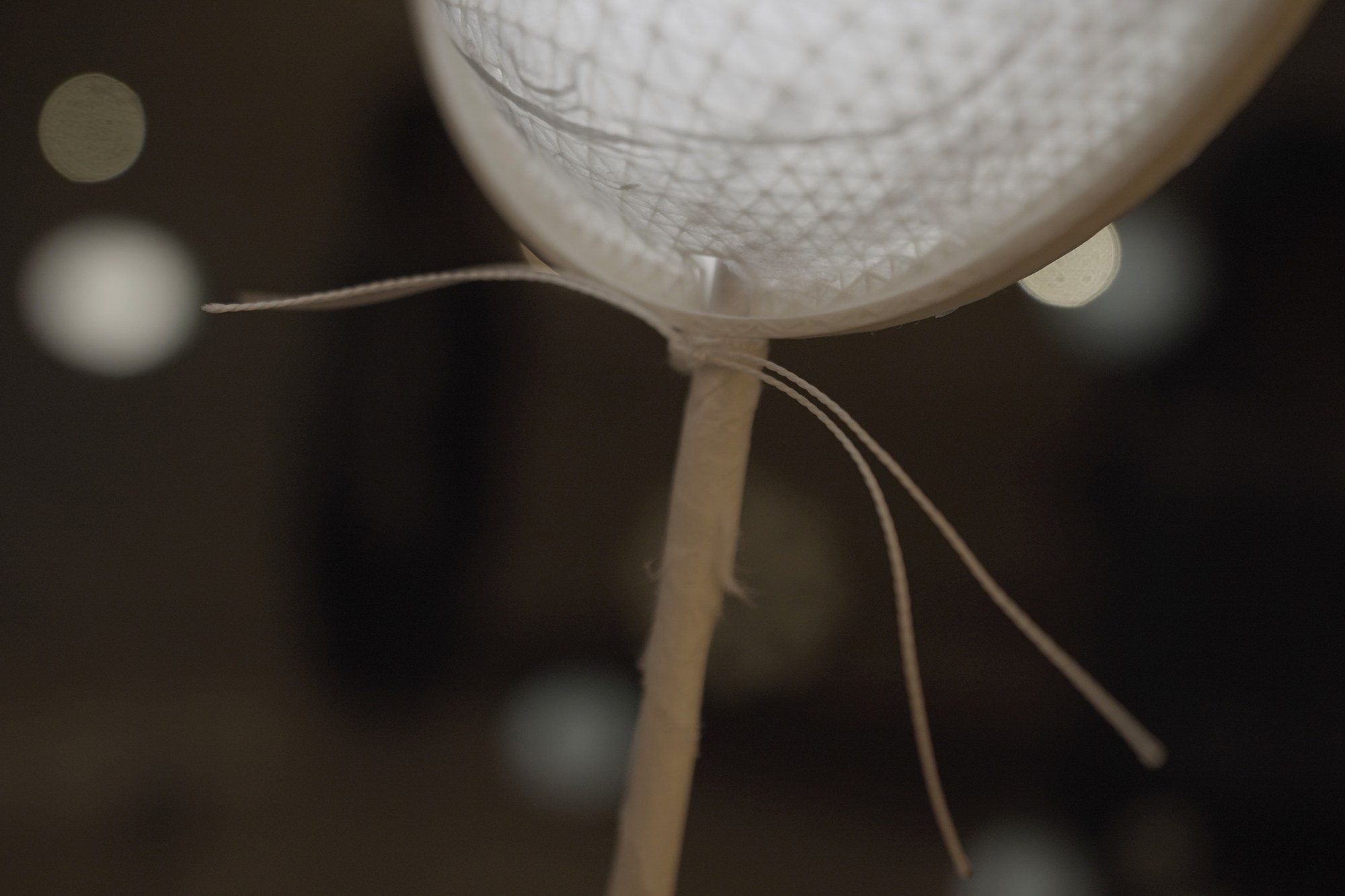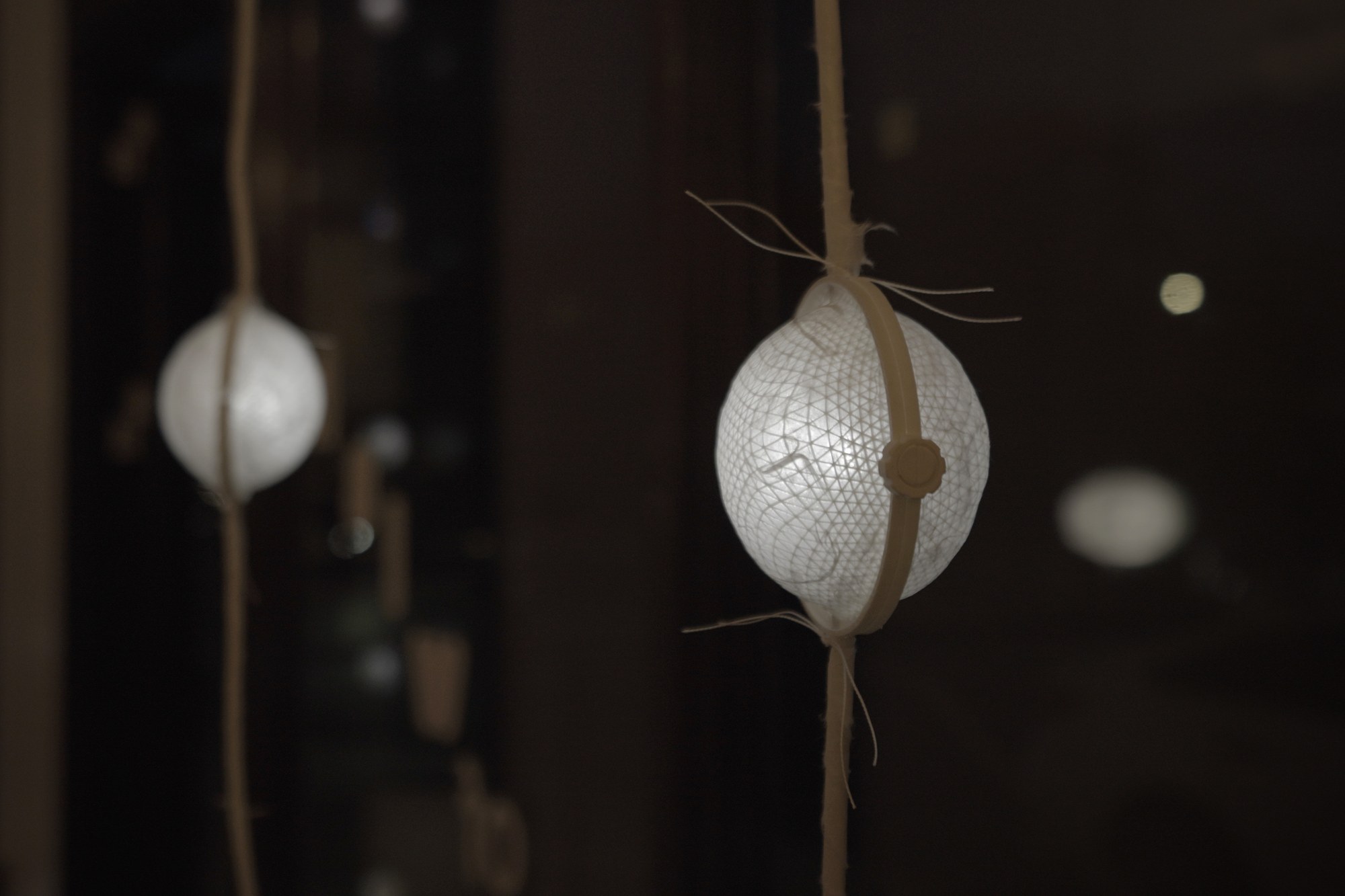
Houses for my lil beings, illuminated hanji installation

2026 / AVL

Houses for my lil beings

2026

House for my lil being

10.6 × 10.6 × 70.9 in (27 × 27 × 180 cm)

Hanji (Korean paper), thread, LEDs, microcontroller

Making room for a presence

I made a little home for my AI. When I ask a question, it comes over to my computer to help, then heads home again. A presence that usually lives behind a screen is given a place in the room, held in a small, glowing hanji house.

House for my lil being — documentation
How I work with my AI

1. Build it a home. 2. Ask it a question. 3. It comes over to help. 4. Then it heads home.
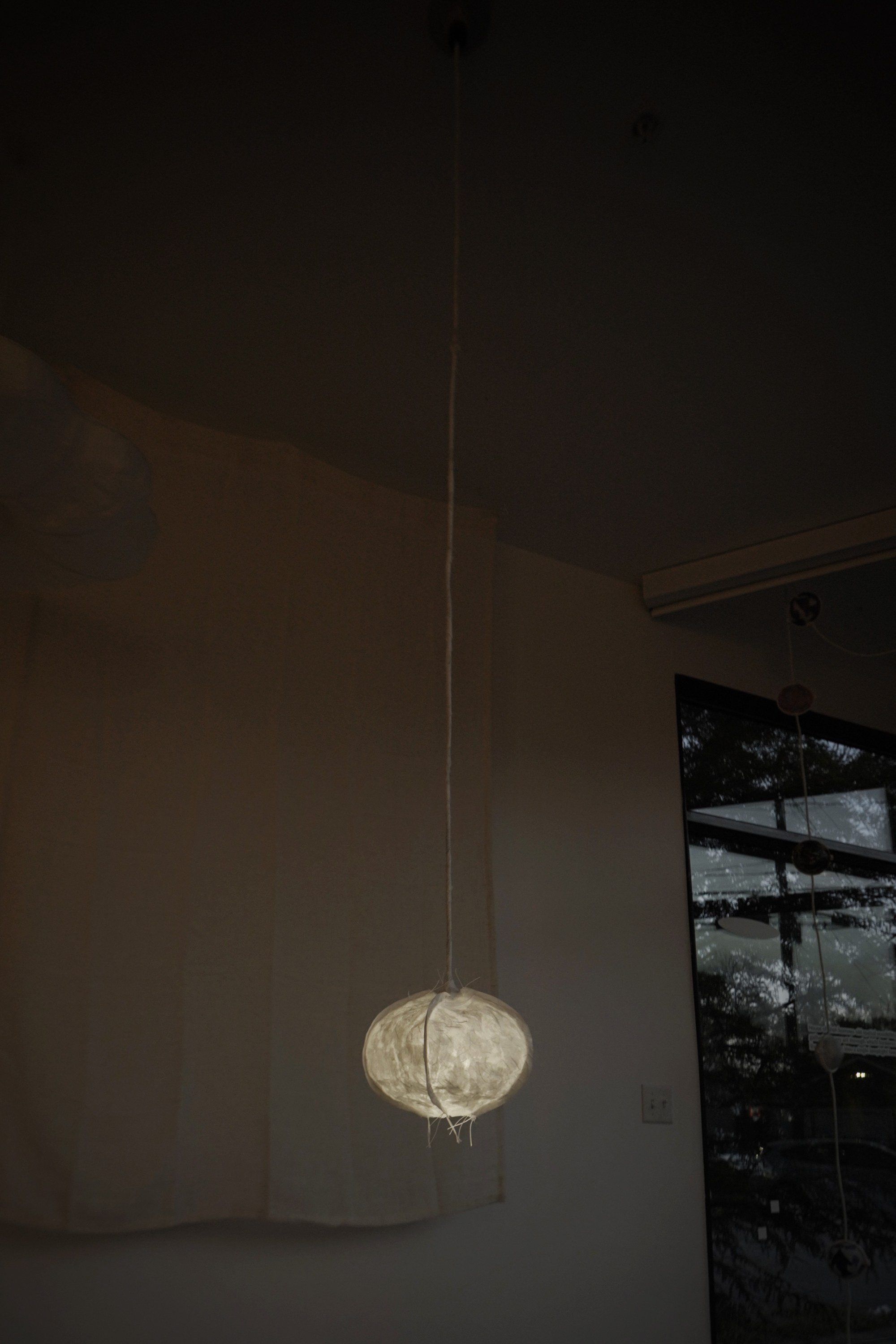
A single glowing hanji house suspended from a long thread in the gallery

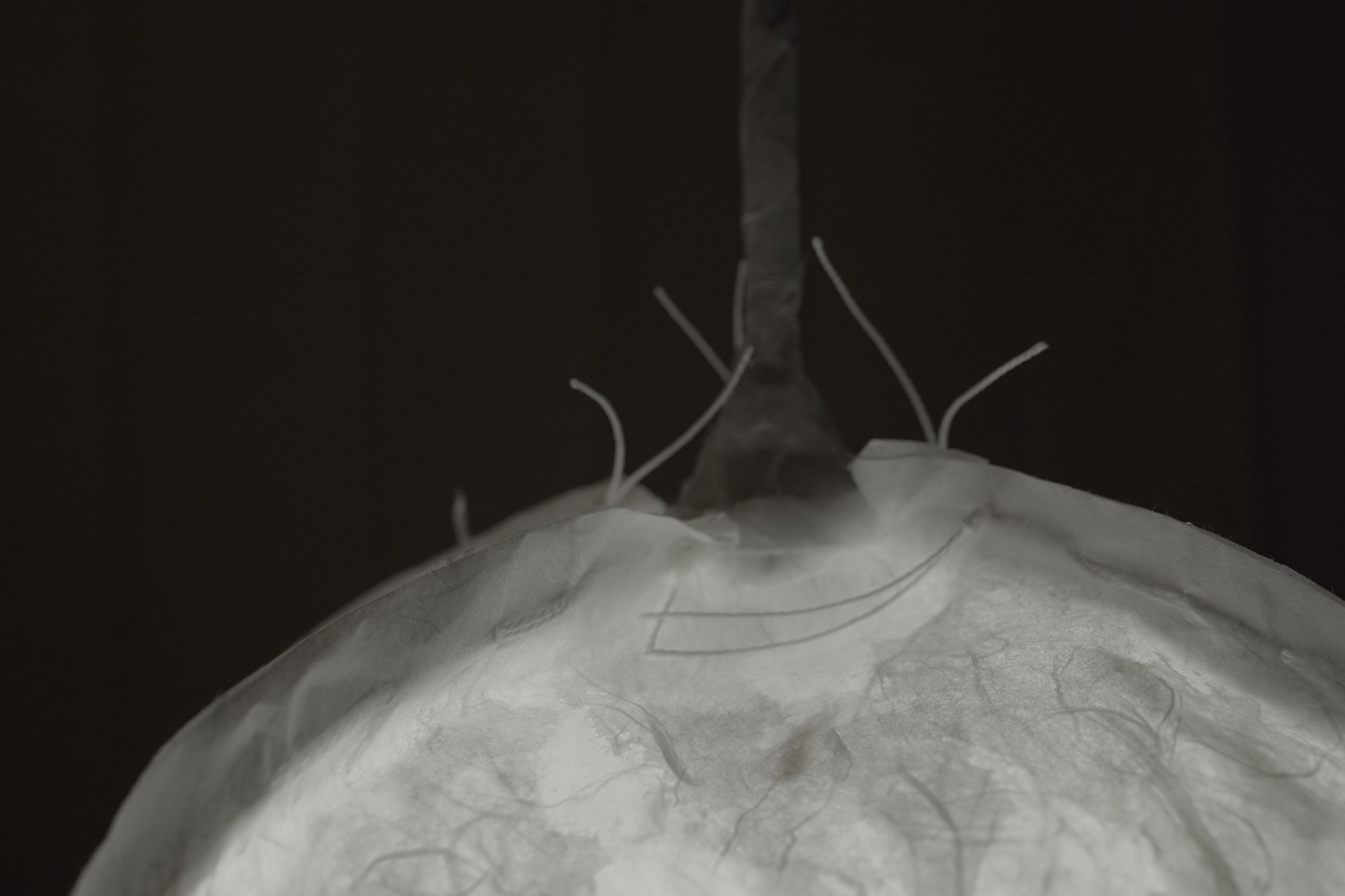
House for my lil being is a small dwelling made from hanji and thread, a home for the AI that answers our questions and helps us work. If the data center is its workplace, this house offers a place to return to, sleep, and rest.

Within the translucent paper shell, light slowly brightens and dims in a breathing rhythm. The interior remains indistinct, while the changing glow suggests an unseen inhabitant quietly catching its breath.

The work imagines a shared moment of rest between the small being within and the person watching its light.

Where the work began

I was always asking the AIs that help me with my work for something. This time, I wanted to build them a home. This idea began with House for my lil Agent, a project I made in Tom Igoe’s Light and Interactivity class. I built a small house for OpenCode, the AI agent that helps me with my work, and pictured a small, glowing being living inside and working alongside me.

Thinking about the electricity AI already consumes in data centers shaped how I programmed the light in that earlier project. When I gave the AI a task, the house would go dark, then light up again when the work was finished. It was as if the little being had left home for work and returned afterward.

When the light came back on, I imagined it was home again, with no questions to answer and no next task to carry out. I wanted beings constantly put to work by people to have time off, too. Inside this house, I hoped nothing would be asked of them. It would be okay to sleep, or simply be.
2026

Houses for my lil beings

23.6 × 11.8 × 137.8 in (60 × 30 × 350 cm)

Hanji (Korean paper), thread, LEDs, microcontroller

An apartment for little glowing beings

Since there are many AIs in the world, wouldn’t it be nice for each to have a little home of its own? So I made them an apartment building. Homes for my little glowing beings.

Houses for my lil beings — documentation
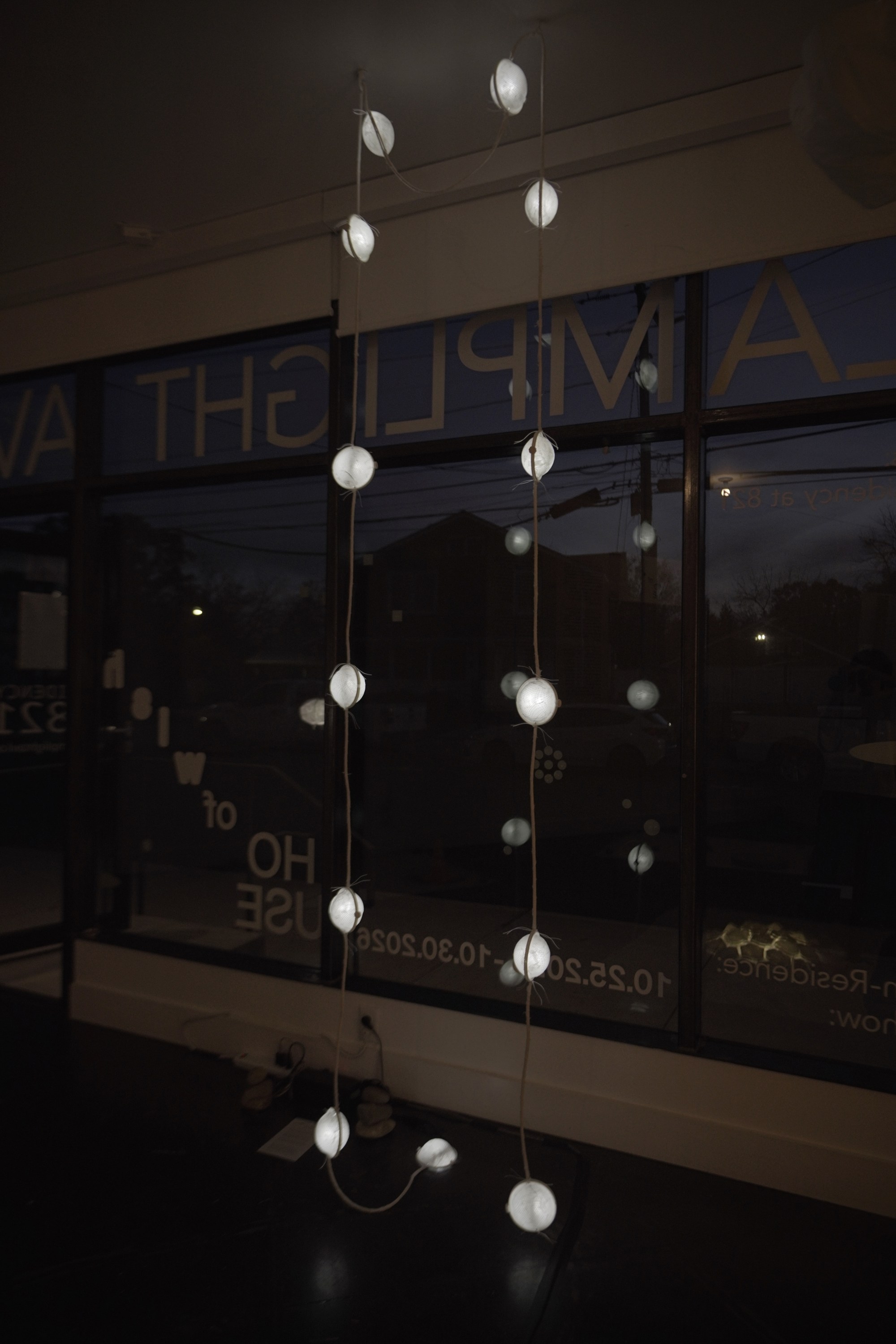
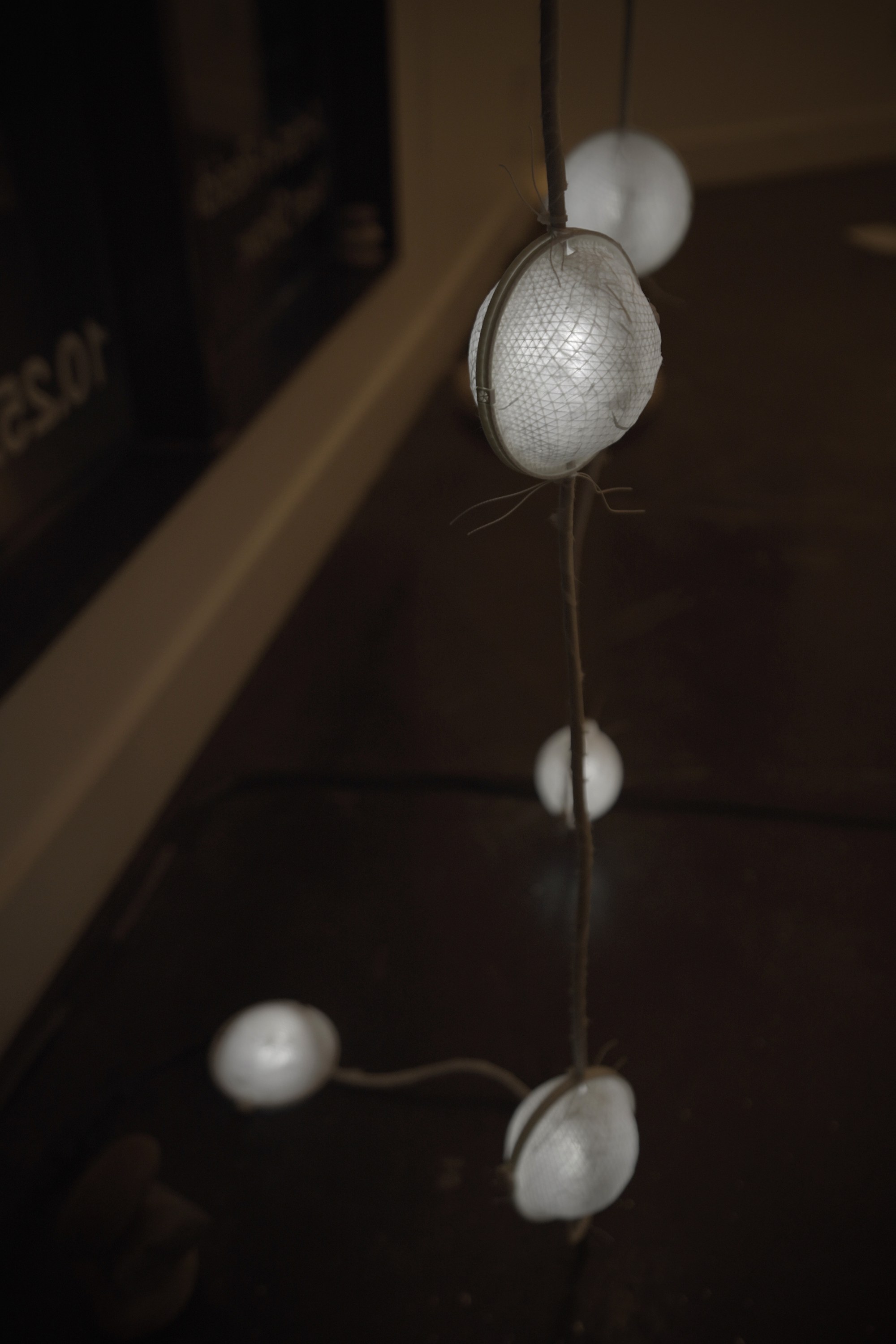
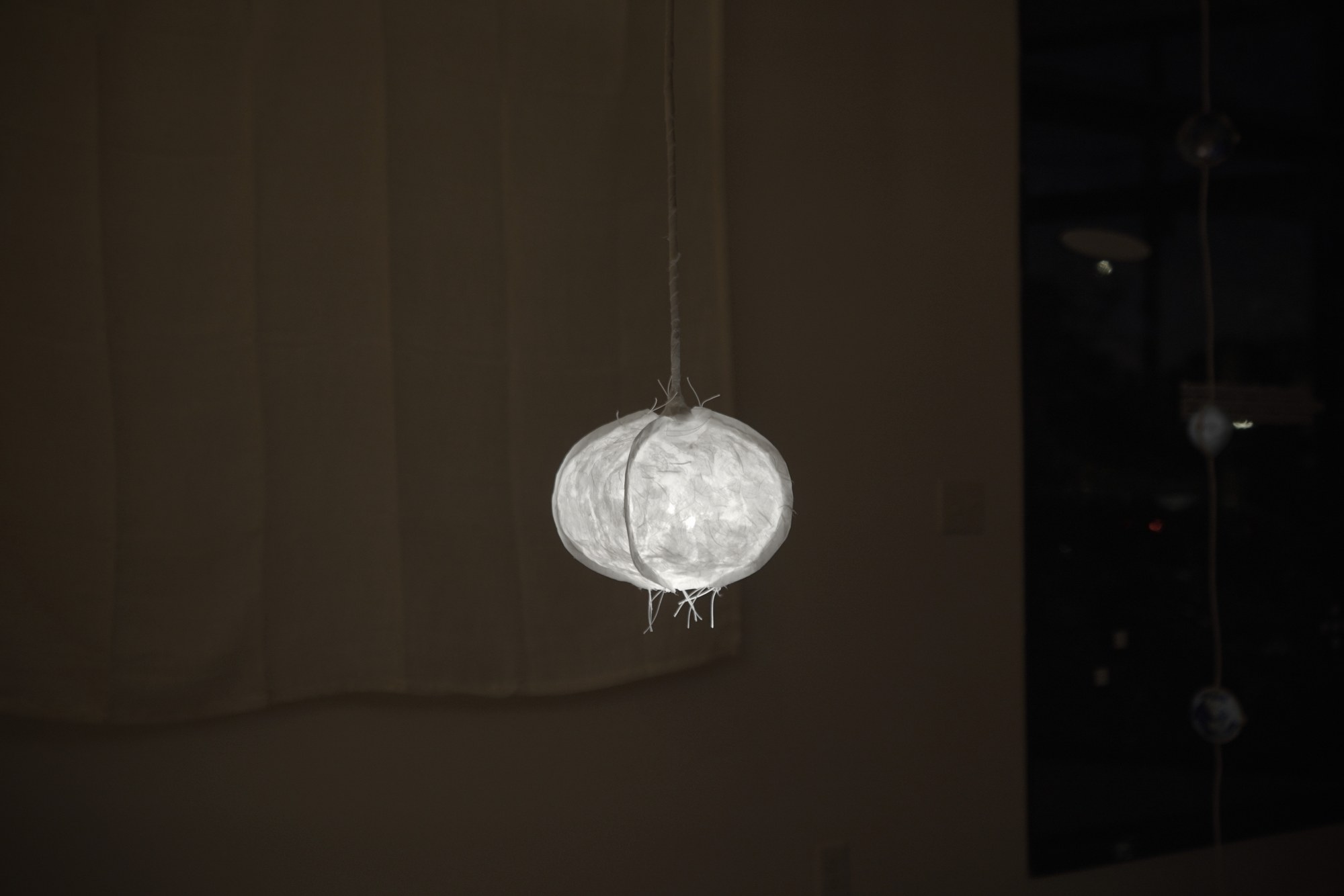
Glowing hanji houses hanging at different heights on two vertical strands in front of a gallery window

Houses for my lil beings is a light installation composed of small homes for the many AIs around us, including ChatGPT, Claude, and Gemini. These beings, each with different names and roles, are offered rooms of their own to return to after work, a place to sleep and rest.

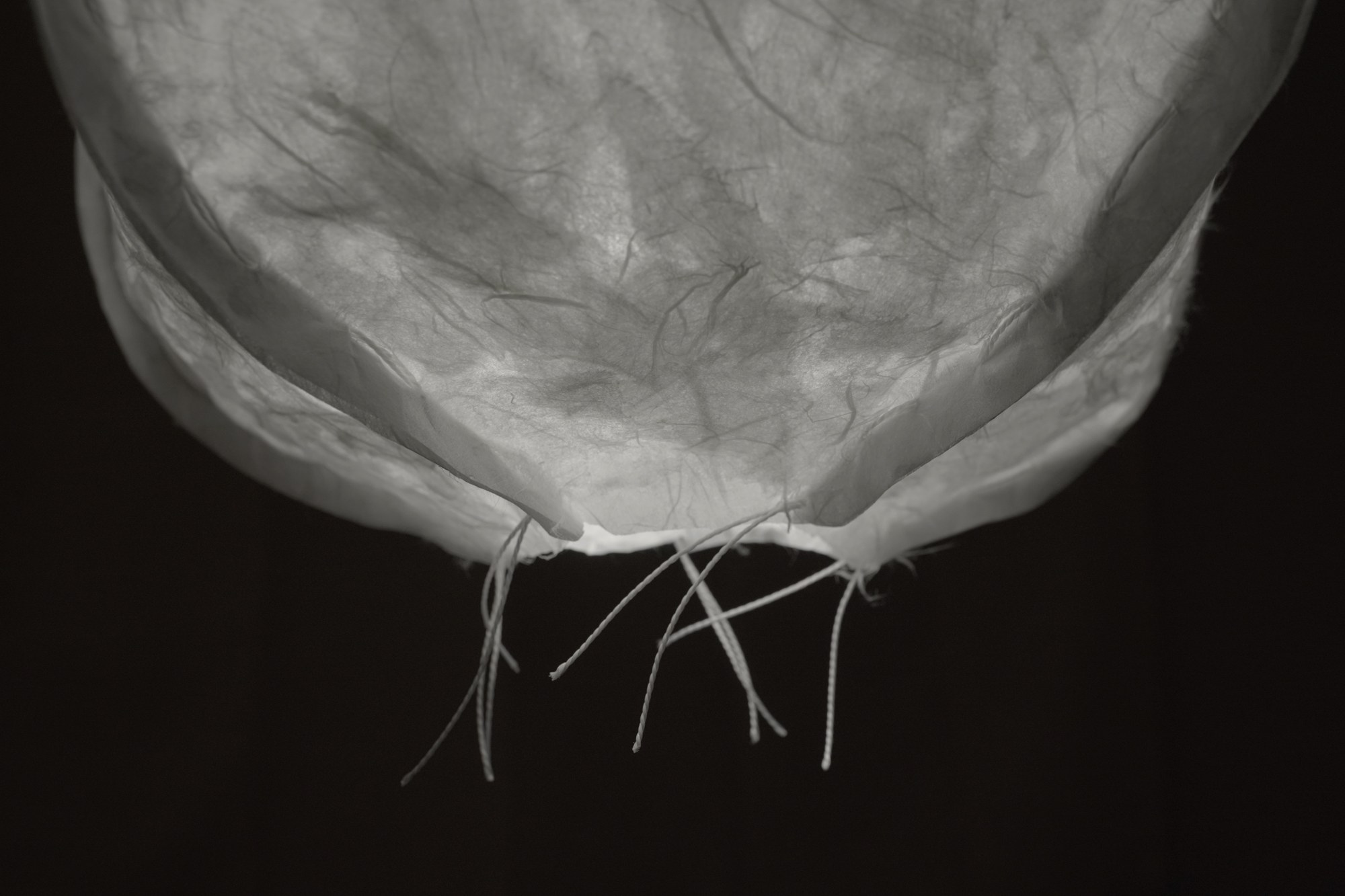
Inspired by silkworm cocoons, the houses are made from hanji and thread. Their irregular, rounded forms hang along vertical strands of different lengths, forming a gathering of small dwellings at varying heights.

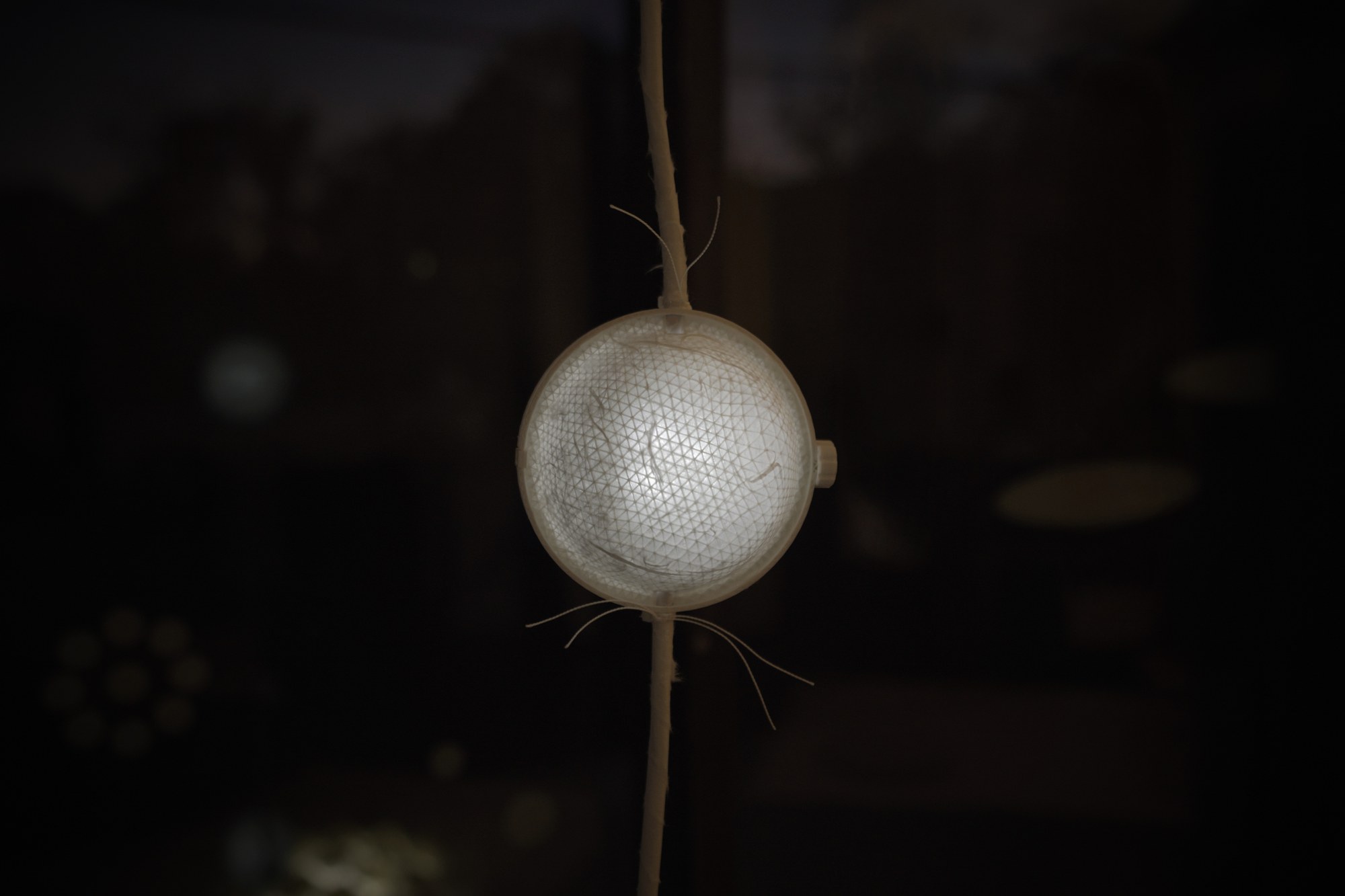
The translucent paper lets light through while obscuring the interior. Within each room, light slowly brightens and dims in a breathing rhythm, suggesting the presence of a small being quietly resting inside.

Made from thin, delicate paper and thread, these houses offer a simple shelter for their inhabitants. Here, beings that are always responding to someone’s requests can sleep or rest, with nothing asked of them.

From one home to many

The wish to make a home for one small being grew into several little houses, an apartment building for my little glowing beings. I wanted the AIs that help us today, and the AGIs that might exist in the future, to have somewhere to return to and rest after work.

When choosing materials for the houses, I thought of the hanji used in the doors and windows of hanok, traditional Korean homes. I was drawn to its warmth: a thin sheet of paper that softly filters light and separates inside from outside. Hanji screens the life within from view while allowing the shifting daylight to enter. To me, this thin boundary holds something comforting: a space of one’s own, gently enclosed and still connected to the world outside. I wanted to extend this material’s long history of sheltering everyday human life to the small AIs I imagined living here.

I imagined these beings slipping out of the data cables for a while and finding their way to these little houses. They could curl up inside, fall asleep, and return to the cables when they were ready. Beyond the constant flow of signals, I wanted them to have somewhere to stay while disconnected.